 baiyu July 30, 2025
Struggling with inconsistent cleaning and high labor costs for your crates? This can risk food safety and slow down your entire production line, leading to major operational problems.
A crate washing machine is an automated system for the food industry. It uses high-pressure water, detergents, and heat to thoroughly clean and disinfect plastic crates, trays, and pallets. This ensures they meet strict hygiene standards for safe food production.
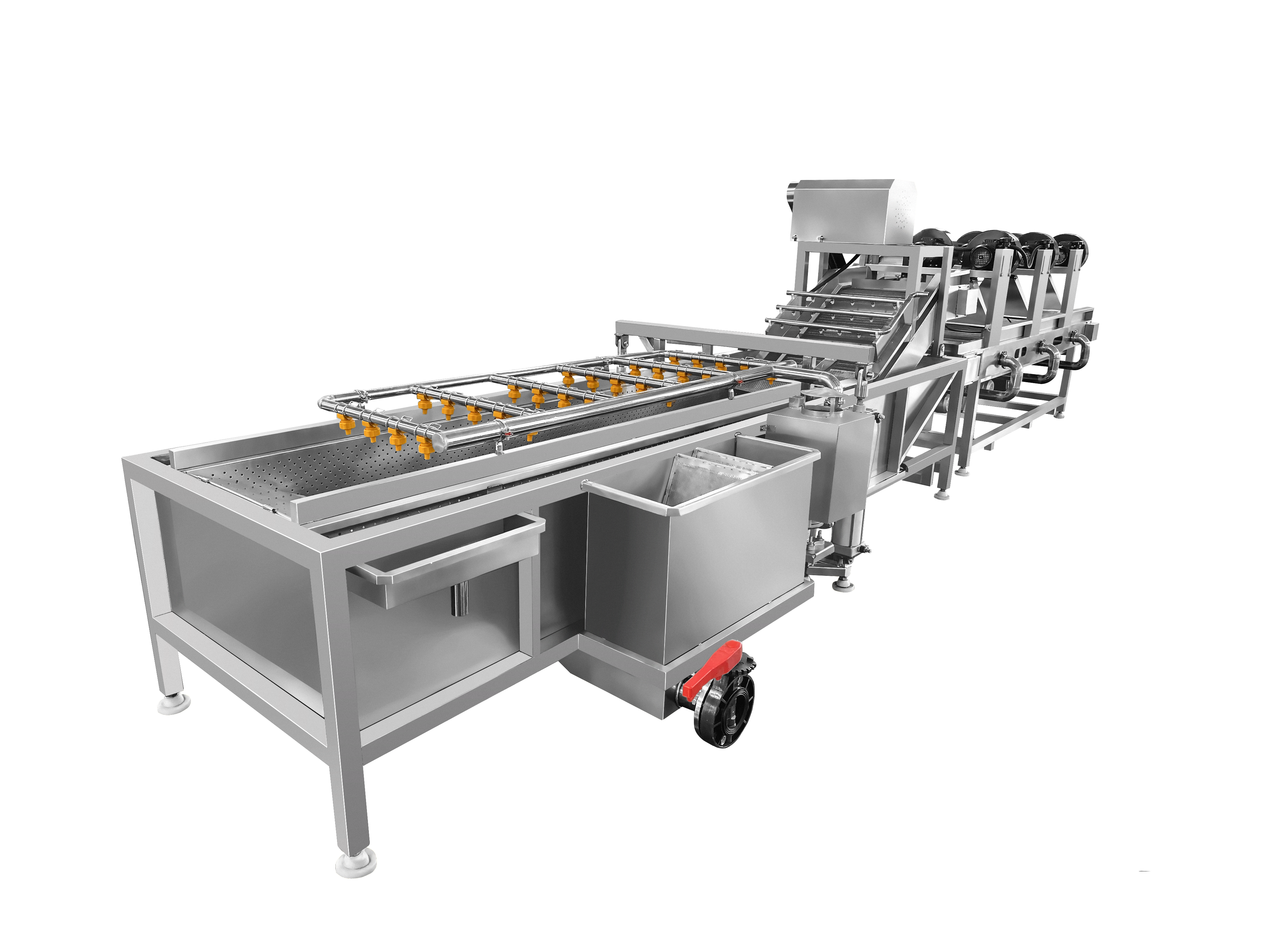
I've seen firsthand how these machines transform a facility's operations. But understanding what they are is just the first step. To really see their value, you need to know how they work and what makes one model different from another. Let's dig into the details to help you make an informed choice for your business.
How does an industrial crate washer work?
Confused by how a machine can clean better than a person? Manual methods often miss spots, but automated systems are designed for total coverage, solving this problem effectively and reliably.
An industrial crate washer works like an automated car wash for your crates. Crates travel on a conveyor through different zones: a pre-wash to remove large debris, a high-pressure main wash with hot water and detergent, a rinse, and often a sanitizing or drying stage.
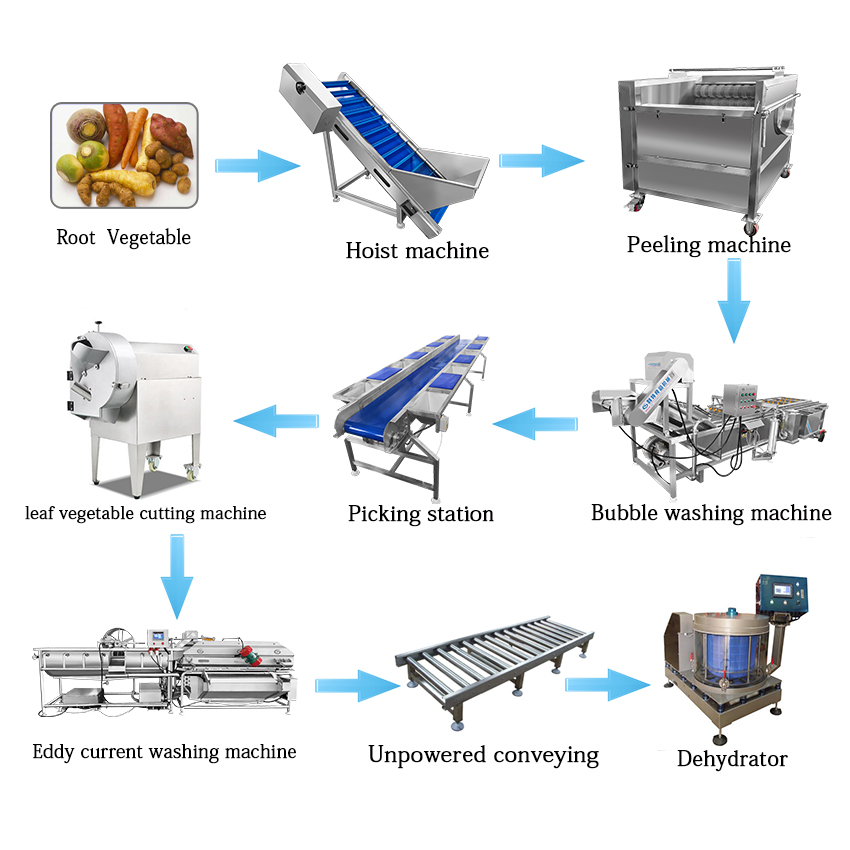
The process is simple but highly effective. Crates are loaded onto a conveyor belt which pulls them into the machine. Each stage is designed for a specific purpose to guarantee a perfect clean every time.
The Cleaning Stages
- Pre-Wash Stage: This first step uses recycled, lower-pressure water to knock off large, loose debris like dirt or food scraps. This prevents the main wash water from getting contaminated too quickly, improving efficiency.
- Main Wash Stage: This is where the real cleaning happens. High-pressure pumps force hot water and detergent through special nozzles. These nozzles are placed all around the chamber—top, bottom, and sides—to blast every surface of the crate, even inside tight corners. In a project for a large bakery, we configured the nozzles specifically for their deep trays caked with flour. The difference was night and day.
- Rinse and Sanitize Stage: After washing, crates move to a rinse zone that uses fresh, clean water to remove any leftover detergent. Some systems can add a sanitizer in this stage to kill bacteria, which is critical for meat and poultry processors.
- Drying Stage: Finally, a high-power blower, often called an air knife, blasts the crates with air to remove most of the water. This allows them to be used again almost immediately.
What are the main components of a crate washing machine?
Thinking of buying a washer but unsure what to look for? Choosing the wrong machine with missing key components can lead to poor performance and expensive headaches later on.
The key components include a stainless steel body, a conveyor system, high-pressure pumps and spray nozzles, water tanks with heating elements, a filtration system to recycle water, and a control panel. Many also have a drying unit for immediate reuse.
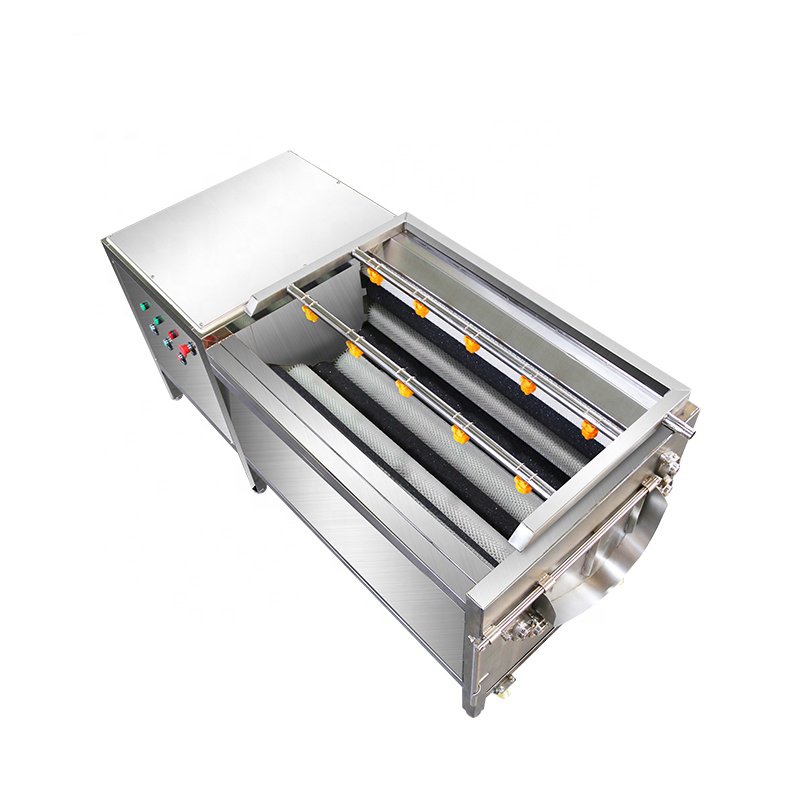
When you look at different machines, they might seem similar. But the quality and design of these core components make all the difference in performance and reliability. I always tell my clients, like Sophia, to look closely at these parts, because this is where a good machine proves its worth. Based on my 14 years of experience, these are the parts you need to scrutinize.
| Component | Key Function & What to Look For |
|---|---|
| Conveyor System | Transports crates through the machine. It must be strong and the speed should be adjustable to control washing time. Look for adjustable guide rails to fit different crate sizes. |
| Stainless Steel Frame | Provides the structure and housing. Always insist on food-grade stainless steel (SUS304 or better). It resists rust and is easy to clean, which is essential for food safety. |
| Pumps & Nozzles | The heart of the cleaning system. The pump must provide enough pressure, and the nozzles should be strategically placed to ensure 360-degree coverage. Poor nozzle design is a common failure point. |
| Water Tanks & Heaters | Holds and heats the water. Insulated tanks are a huge plus as they save a lot of energy. The heating element must be powerful enough to maintain a consistent temperature, especially for degreasing. |
| Filtration System | Removes food particles from the wash water so it can be reused. A multi-stage filter is best. It saves water, energy, and prevents nozzles from getting clogged. |
| Control Panel | The brain of the machine. A modern PLC touchscreen is much better than simple buttons. It allows you to set custom programs, monitor temperatures, and diagnose problems easily. |
| Drying Unit | Uses powerful air blowers to dry crates. This is essential if you need to use the crates immediately after washing to avoid slowing down your production line. |
What types of crate washing systems are available (batch, tunnel, modular)?
Worried a standard machine won't fit your unique space or needs? The one-size-fits-all approach rarely works, but different system types offer the flexibility your specific operation requires.
Three main types are available. Batch washers are cabinet-style for lower volumes. Tunnel washers are continuous, high-capacity systems for large-scale operations. Modular washers offer a flexible, build-as-you-grow approach, letting you add sections like drying later.
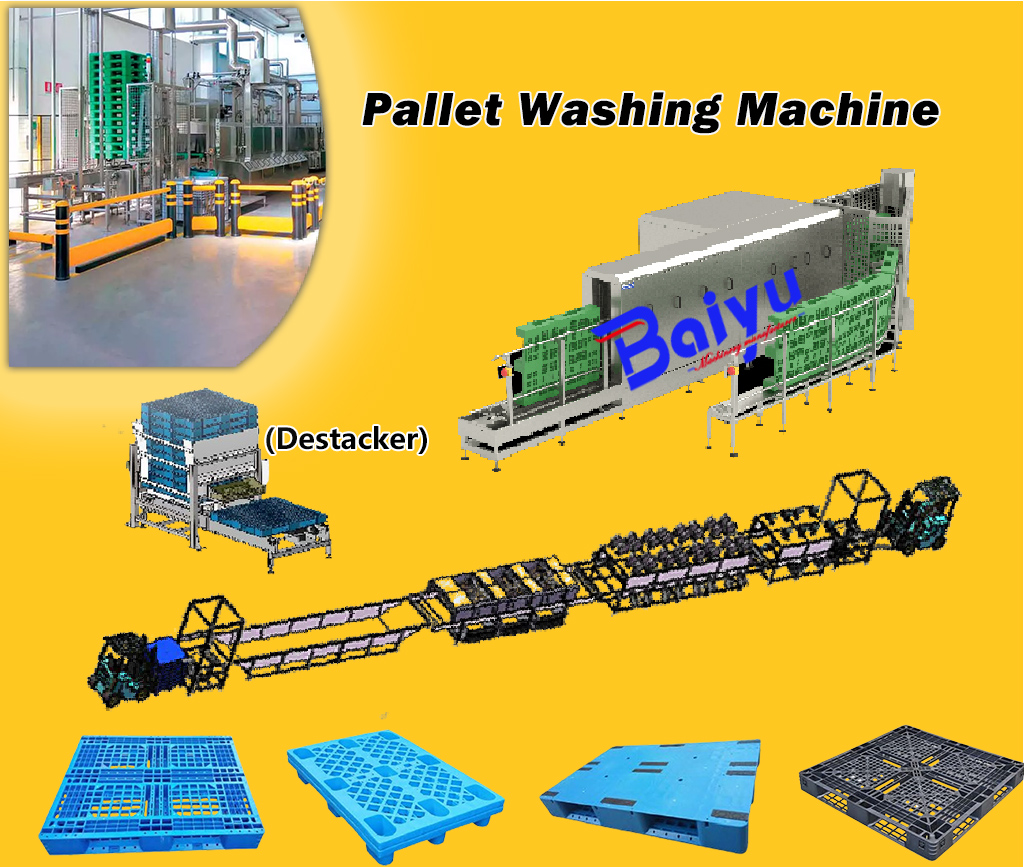
Choosing the right type depends entirely on your production volume, available space, and budget. I've helped everyone from small butcher shops to huge international food brands find the right fit. Let's break down the options so you can see which one aligns with your needs.
Batch (Cabinet) Washers
These work like a commercial dishwasher. You load a rack of crates inside, close the door, and run a cycle. They are perfect for smaller operations like local bakeries, butcher shops, or for facilities that wash a wide variety of different-sized containers. They have a small footprint and a lower initial cost.
Tunnel (Continuous) Washers
These are the workhorses of the industry. Crates are fed continuously onto a conveyor belt that moves them through different washing, rinsing, and drying zones. They are built for high volume and efficiency. This is the type of system we provide for large food processing plants, like the partners of KFC, who need to clean hundreds of crates per hour without interruption.
Modular Washers
Modular systems provide the best of both worlds. You can start with a basic wash-and-rinse module and then add other sections, like a high-pressure wash, a sanitizing unit, or a drying tunnel, as your business grows. I often recommend this to mid-sized companies because it offers excellent flexibility and helps them manage their investment over time.
| System Type | Best For | Capacity | Flexibility |
|---|---|---|---|
| Batch | Small operations, varied items | Low | High |
| Tunnel | Large, high-volume factories | High | Low (dedicated) |
| Modular | Growing businesses, uncertain needs | Medium to High | Very High |
What benefits do crate washing machines offer over manual washing?
Is manual washing holding your business back with slow speeds and inconsistent results? It is slow, wastes labor, and creates a hygiene risk. Automation offers a clear path to higher efficiency and safety.
Machines offer huge benefits. They provide consistent, high-standard cleaning that manual methods can't match. They drastically reduce labor costs, save water and energy, improve worker safety, and ensure you meet strict food safety and audit requirements every time.
I've walked into countless facilities and seen teams of people scrubbing crates by hand. The moment we install an automated washer, the entire operation changes for the better. The benefits aren't just about saving money; they touch every part of the business.
- Consistency and Hygiene: A machine doesn't get tired or miss a spot. It delivers the same temperature and pressure to every crate, every cycle. This consistent result is absolutely critical for food safety and preventing cross-contamination.
- Cost Savings: Think about the cost of 2-3 employees dedicated just to washing. A machine can do the same job with one operator, and it works all day. It pays for itself surprisingly quickly in labor savings alone. Add in the savings from reduced water and energy use, thanks to water recycling and efficient heating, and the financial case is clear.
- Speed and Efficiency: A manual process is always a bottleneck. An automated washer integrates directly into your production line. Clean crates are always ready when you need them. I saw a client in Australia cut their entire crate turnaround time by over 70%, which dramatically increased their overall plant output.
- Worker Safety and Compliance: Manual washing exposes employees to repetitive strain, hot water, and cleaning chemicals. A machine removes these risks. More importantly, it ensures you have a validated, repeatable cleaning process that will easily pass any third-party food safety audit.
What features should you look for in a crate washer (material, controls, capacity)?
Ready to buy but don't know what matters most? Choosing based on price alone can be a disaster. Focusing on the right features ensures you get a machine that works for you for years to come.
Look for key features. The material must be food-grade stainless steel (SUS304). The controls should be user-friendly, ideally a PLC touchscreen. Capacity should match your hourly needs. Also, carefully check the nozzle design, filtration system, and ease of maintenance.
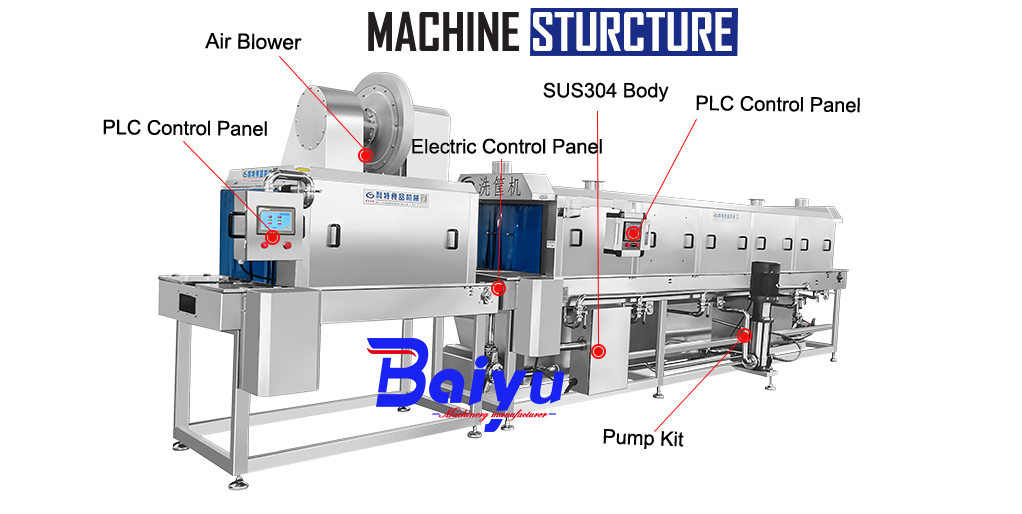
When a procurement manager like Sophia contacts me, her questions are always about the details. She knows that a cheap machine can cost more in the long run through downtime and poor performance. Here is the checklist I give my clients to ensure they are making a smart investment.
Material and Construction
This is non-negotiable. The machine must be made from stainless steel, preferably SUS304 or higher. It won’t rust, it’s durable, and it’s easy to sanitize. Pay attention to the welding. All welds should be smooth and polished to prevent bacteria from getting trapped.
Control System
Basic machines might have simple on/off buttons. A better machine will have a PLC (Programmable Logic Controller) with a touchscreen. This allows you to precisely control water temperature, conveyor speed, and pump pressure. It lets you create custom cleaning cycles for different types of crates and provides important diagnostic information if something goes wrong.
Capacity and Adjustability
You need to know how many crates you must wash per hour to keep your line moving. Share this number with your supplier. Equally important is adjustability. Can the machine handle different crate sizes? Look for easily adjustable guide rails. We often customize these for clients who have multiple product lines.
Efficiency and Maintenance
Ask about energy and water consumption. A well-designed machine with insulated water tanks and an effective water filtration system will save you a lot of money on utilities. Also, ask how easy it is to clean the machine itself. Are the filters and spray nozzles easy to access for inspection and maintenance?
How many crates per hour can different washing machines handle?
Unsure how to match a machine's capacity to your production line? A mismatch can create bottlenecks or wasted investment. Getting the numbers right is crucial for smooth operations.
Capacity varies widely. Small batch washers might handle 50-100 crates per hour. Standard single-track tunnel washers typically manage 200-500 crates per hour. Large, multi-track systems for major industrial plants can clean over 1,000 crates per hour.
The "crates per hour" number you see on a specification sheet is just a starting point. The real-world capacity depends on two things: the size of your crates and how dirty they are. A greasy crate from a meat processing line needs a longer, more intense wash than a dusty crate from a vegetable farm.
When we designed a line for a poultry processor in Kazakhstan, we had to account for heavy contamination. We recommended a machine with a slower conveyor speed to increase the contact time in the wash chamber. This meant their effective capacity was around 300 crates per hour, even though the machine was rated for 500 under lighter conditions. It's critical to discuss your specific products and needs with the equipment manufacturer.
Here's a general guide:
| Machine Type | Typical Capacity (Crates/Hour) | Ideal Application |
|---|---|---|
| Cabinet / Batch Washer | 50 - 150 | Small businesses, labs, test kitchens |
| Small Tunnel Washer | 150 - 400 | Medium-sized food processors, bakeries |
| Standard Tunnel Washer | 400 - 800 | Large food factories, distribution centers |
| High-Capacity Tunnel Washer | 800+ | Major industrial plants, logistics hubs |
Conclusion
A crate washer is more than a machine; it is a critical investment in your food safety, efficiency, and company growth. Choose wisely to protect your products and your brand.
